
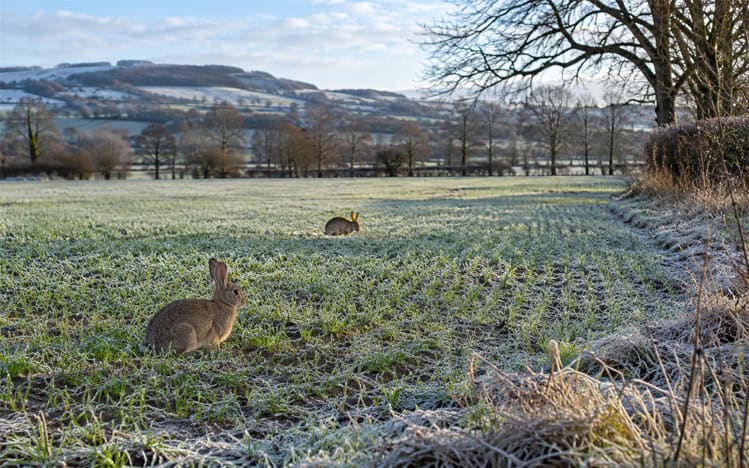
Winter Rabbit Protection for Perthshire Farm Crops
Safeguard Perthshire Winter Crops Before Rabbits Feed
Winter crops need protection long before obvious bare patches appear. Across Perthshire, natural food becomes harder to find from late autumn onwards, which can draw rabbits from woodland edges, hedgerows, field margins and rough ground into newly established wheat, barley and oilseed rape.
The first problems often occur around sheltered boundaries, where rabbits can move between cover and a food source with little disturbance. Repeated grazing can leave crops uneven, slow establishment and create the same damaged areas week after week. This guidance relates to Perth, Scotland, UK, not Perth in Western Australia, and is designed to help farmers, growers and landowners spot activity early and protect vulnerable ground before losses spread.
Spot Rabbit Damage Before Crop Losses Grow
Rabbit damage has a distinctive look when you know what to check for. Plants are often cleanly nipped rather than torn, and young shoots may be grazed close to ground level. In winter, cereals and oilseed rape can be vulnerable because repeated feeding happens before plants are strong enough to recover well. Cold, wet conditions may also slow regrowth.
Damage is commonly heaviest beside hedgerows, shelter belts, ditches, farm buildings and neighbouring rough ground. Rather than treating a whole holding based on one damaged patch, it is sensible to identify where rabbits are entering and feeding first.
Signs worth recording include:
- Cleanly nipped shoots and closely grazed crop patches
- Damaged young leaves, especially along field edges
- Small, round rabbit droppings near feeding areas
- Runs through vegetation, shallow scrapes and disturbed soil
- Burrows or warrens in banks and uncultivated margins
Regular checks after sowing, after frosty weather and along known rabbit habitat can reveal a problem before it becomes widespread. Professional rabbit control in Perth can also help confirm whether rabbits are the cause, particularly where crop damage could be confused with other pest, weather or establishment issues.
Build Strong Boundaries Around Vulnerable Fields
For high-value crops, young plantations and ground with a history of grazing, rabbit-proof fencing is one of the most dependable long-term measures. The right specification and installation matter. A fence that is damaged, poorly secured at ground level or left with gaps under gates can quickly lose its value.
Boundary management also deserves attention. Long grass, dense scrub, unmanaged banks, stacked materials and neglected corners around buildings can give rabbits cover and safe routes into crops. A balanced approach should consider practical crop protection alongside wider habitat and conservation responsibilities.
Protection work should include regular attention to:
- Gate lines and gaps below fencing
- Vegetation growing into or around fence sections
- Areas where rabbits may burrow underneath boundaries
- Young trees and planting areas near rough ground
- Damaged walls, banks and other features used as access routes
Looking beyond the visible damage is important. Rabbits do not recognise farm or estate boundaries, so adjacent land can affect the success of any prevention work. Where several landowners are seeing activity, coordinated management of access routes and cover is often more effective than isolated action.
Use Professional Rabbit Control at the Right Time
Basic prevention may not be enough where grazing continues after boundary repairs, warrens are established close to cultivated land or damage is appearing across several fields. Increased activity around farm buildings, storage areas and crop edges can also show that rabbits are moving through the site rather than feeding in one small area.
In these situations, a professional assessment should focus on the full pattern of activity. Likely entry points, cover, burrow locations, crop boundaries and the wider land layout should be considered before a site-specific management plan is recommended. Exclusion and habitat management can be combined with lawful, humane control where this is required.
Rabbit management in Scotland carries legal, safety and welfare responsibilities. Landowner permission, suitable competence, non-target species and current Scottish legislation all need careful consideration. Untrained people should not attempt specialist measures involving firearms, trapping or other methods that require experience and proper judgement.
A professional approach can be especially helpful on commercial farms, agricultural estates, rental land and business premises with extensive grounds. Good records of recurring activity and completed prevention work also make it easier to judge whether the plan is reducing pressure over time.
Keep Winter Crop Protection Working Until Spring
Rabbit prevention should continue through winter rather than stopping after the first fencing work or treatment. Frost, heavy rain, snow cover and reduced natural food can all change feeding behaviour. A boundary that seems quiet one week may become active when conditions shift.
A simple monitoring routine helps identify patterns and respond before grazing becomes severe. Field notes can include fresh damage, concentrated droppings, new runs and any fence sections affected by storms, machinery or ground movement. Reviewing these records before spring growth starts can also protect young spring crops, newly planted trees and landscaped areas around farm premises.
Persistent activity in Perth, Scotland and across Perthshire may need a planned programme combining inspection, proofing, habitat management and professional treatment. Rabbit control in Perth is generally more successful when action is based on where rabbits are living and travelling, not only where crop damage is easiest to see.
Plan Early for Healthier Spring Establishment
Early signs, well-maintained boundaries and timely action against established activity give winter crops a better chance to establish evenly. Where regular grazing is present near crops, field margins, farm buildings or young planting areas, a professional assessment can clarify the source of pressure and the most suitable next steps.
Ongoing observation and prompt boundary repairs remain the practical foundation of keeping rabbit damage from carrying into spring.
Practical Support for Healthier Winter Crops
If rabbit activity is affecting your land, our rabbit control in Perth service can help identify suitable, responsible measures for your property. Andy Law Pest Control provides practical advice and treatment tailored to farms, gardens and commercial sites across Perthshire. To discuss your circumstances with our team, contact us for professional guidance.